Cat window sill perch, wooden frame
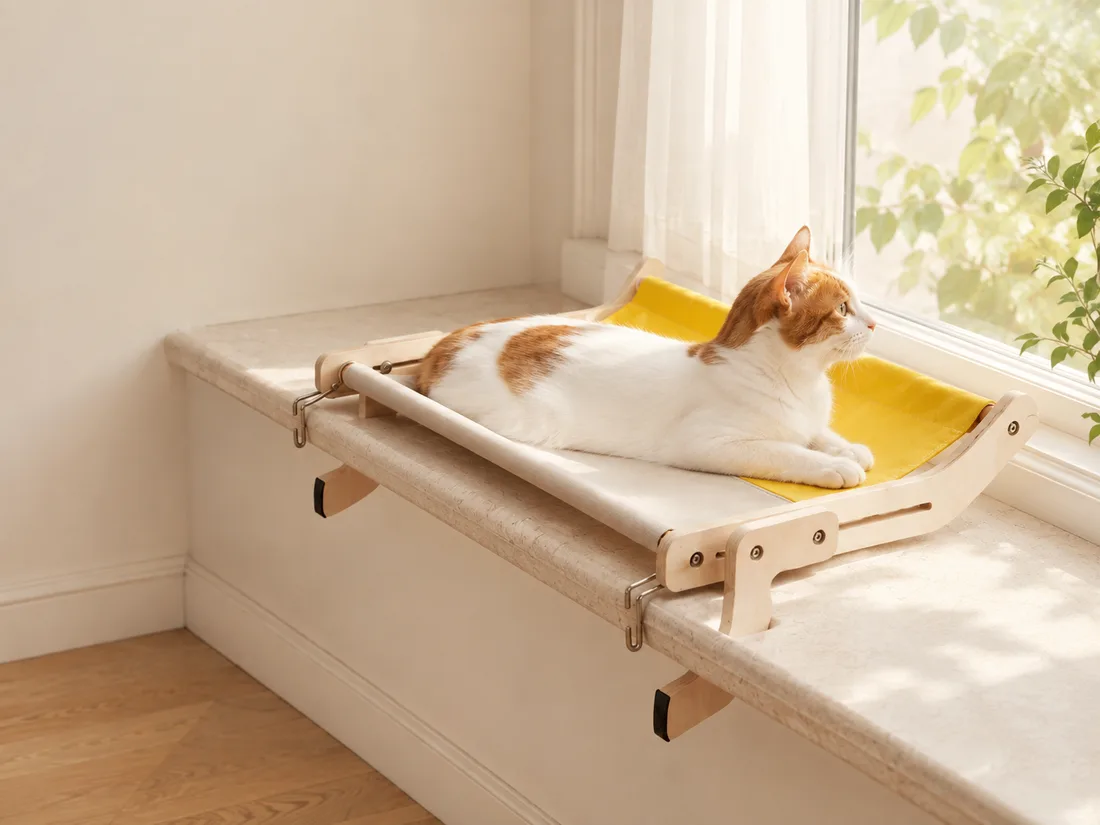
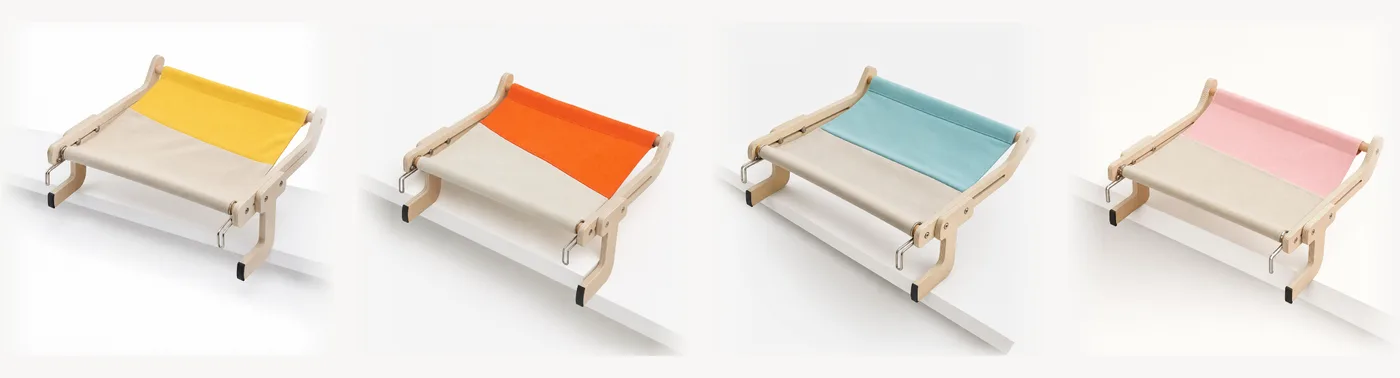
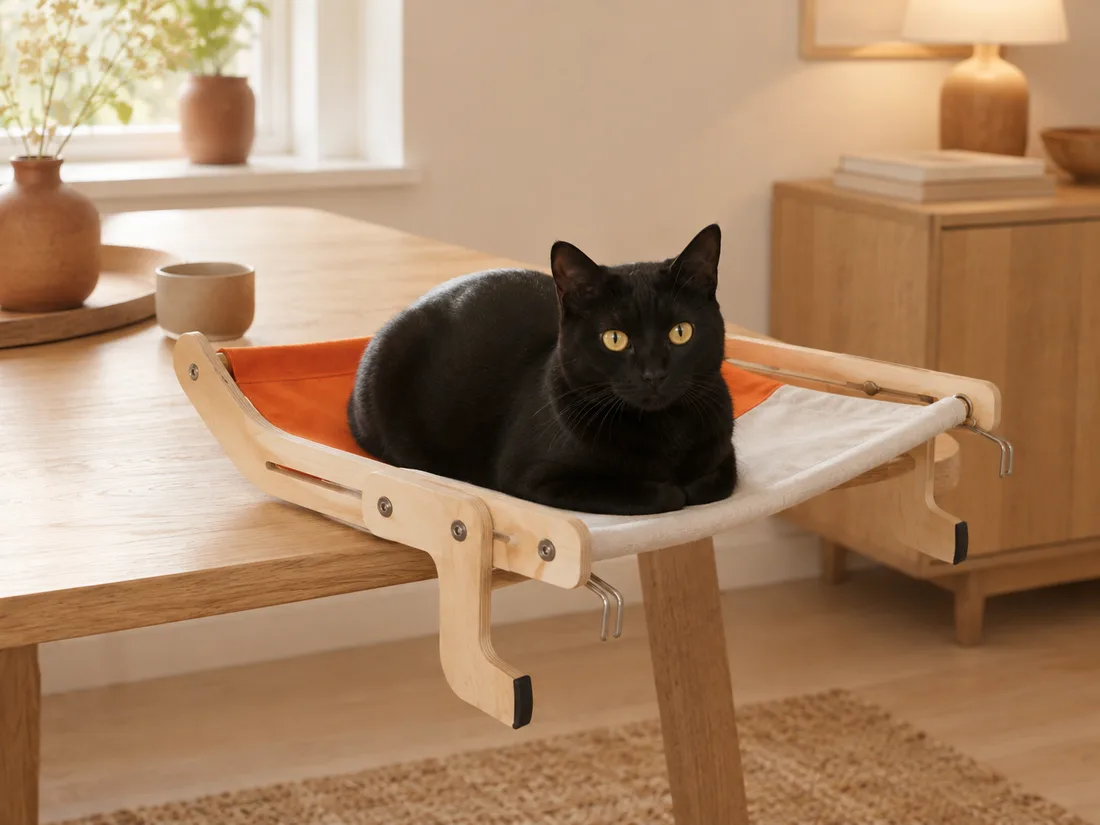
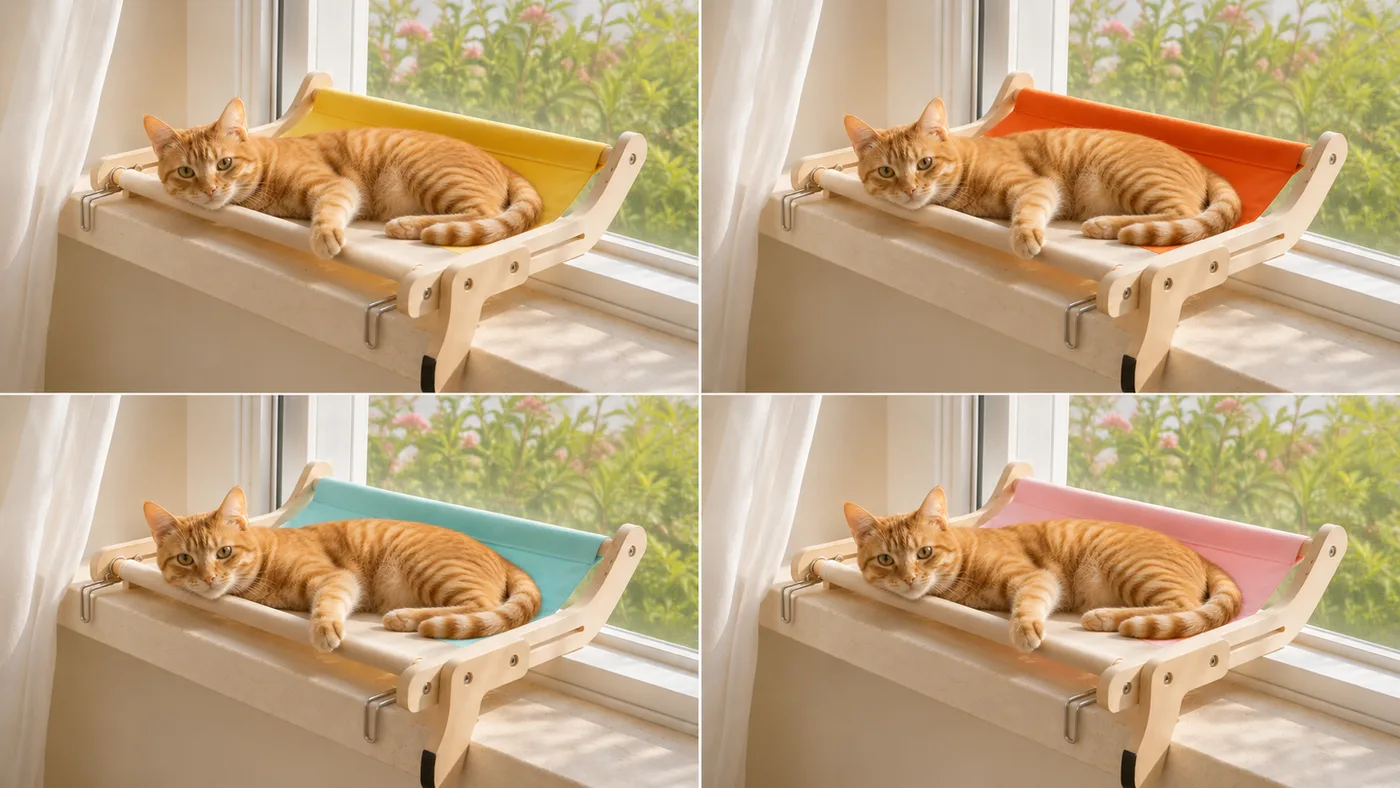
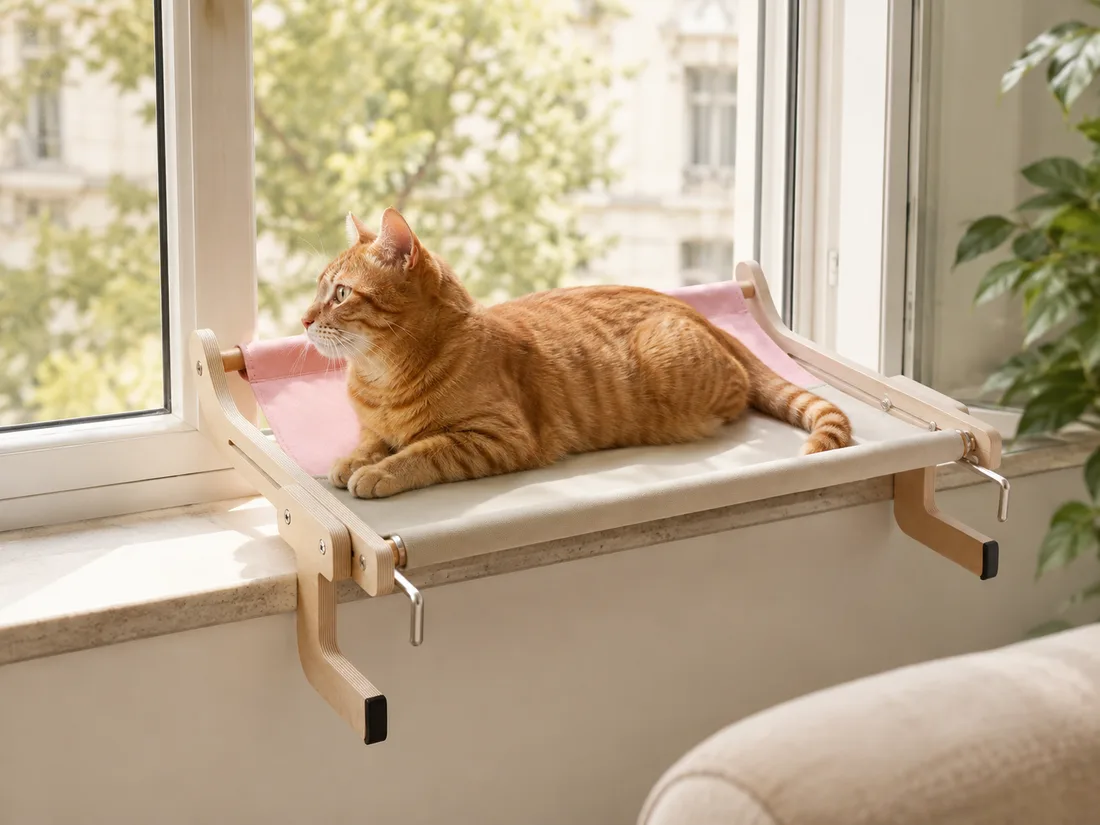
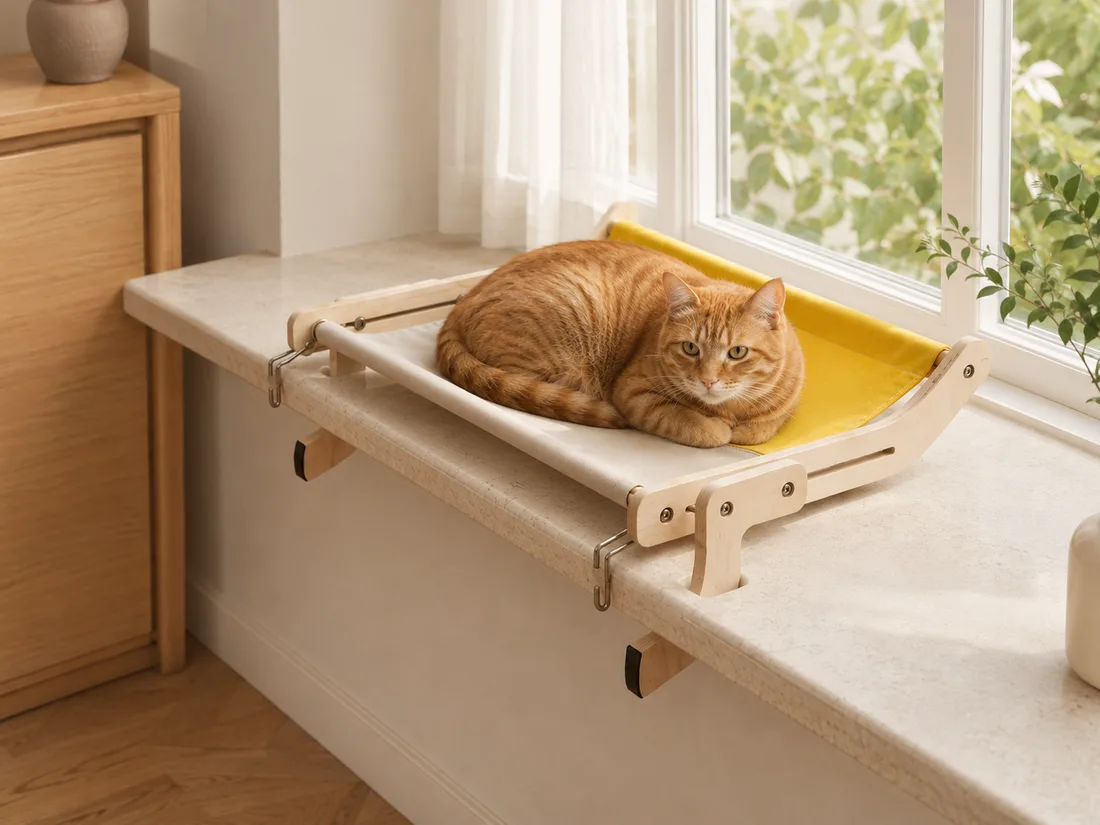
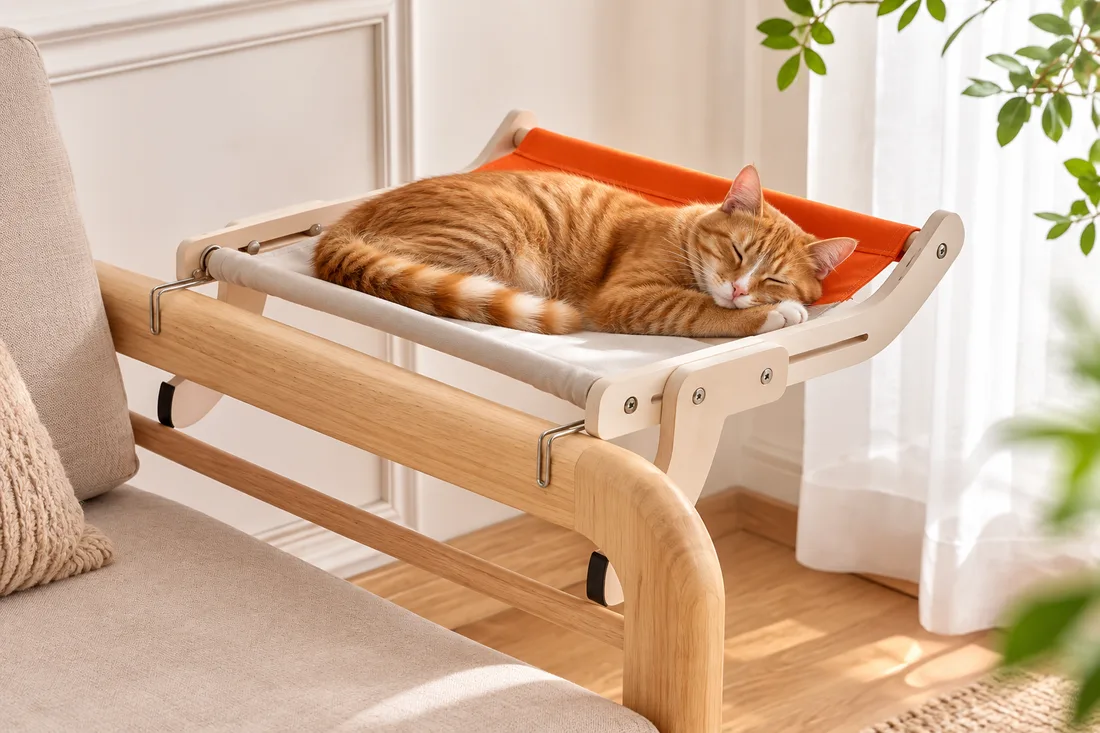
A plywood frame that clamps onto the window sill and stretches a washable cotton canvas. Four colors — and it stands on the floor too when the window is taken.
For windows that have a sill
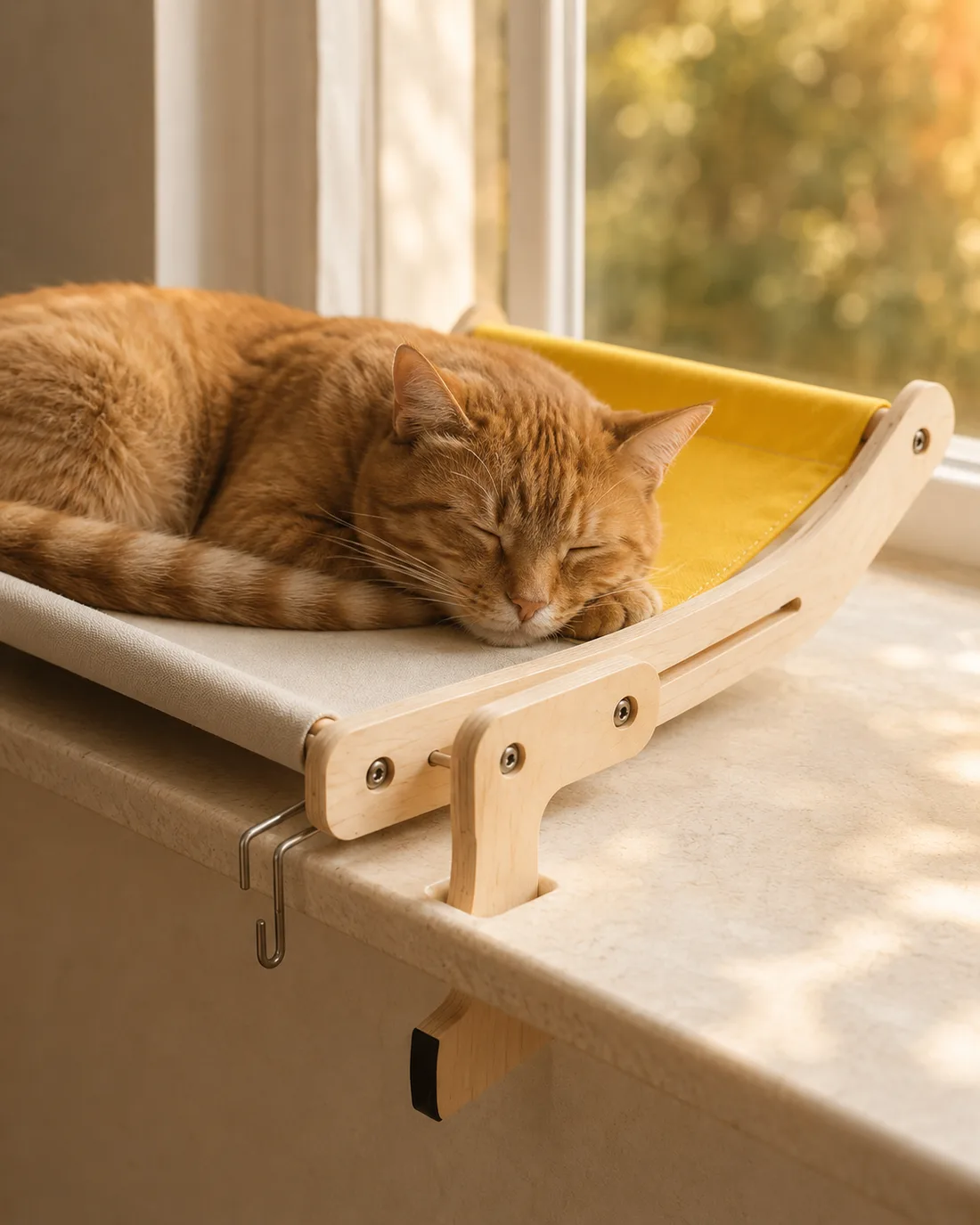
Where the suction model lives on the glass, this one rests on the masonry. It is the answer when the pane is too narrow, when it is frosted, or simply when you would rather stick nothing to the window at all.
The hooks under the ledge are adjustable. One buyer describes a basement window where the fit was "slightly tight, but easy to adjust" — that adjustment is what absorbs the differences between one sill and the next.
Which window sills work
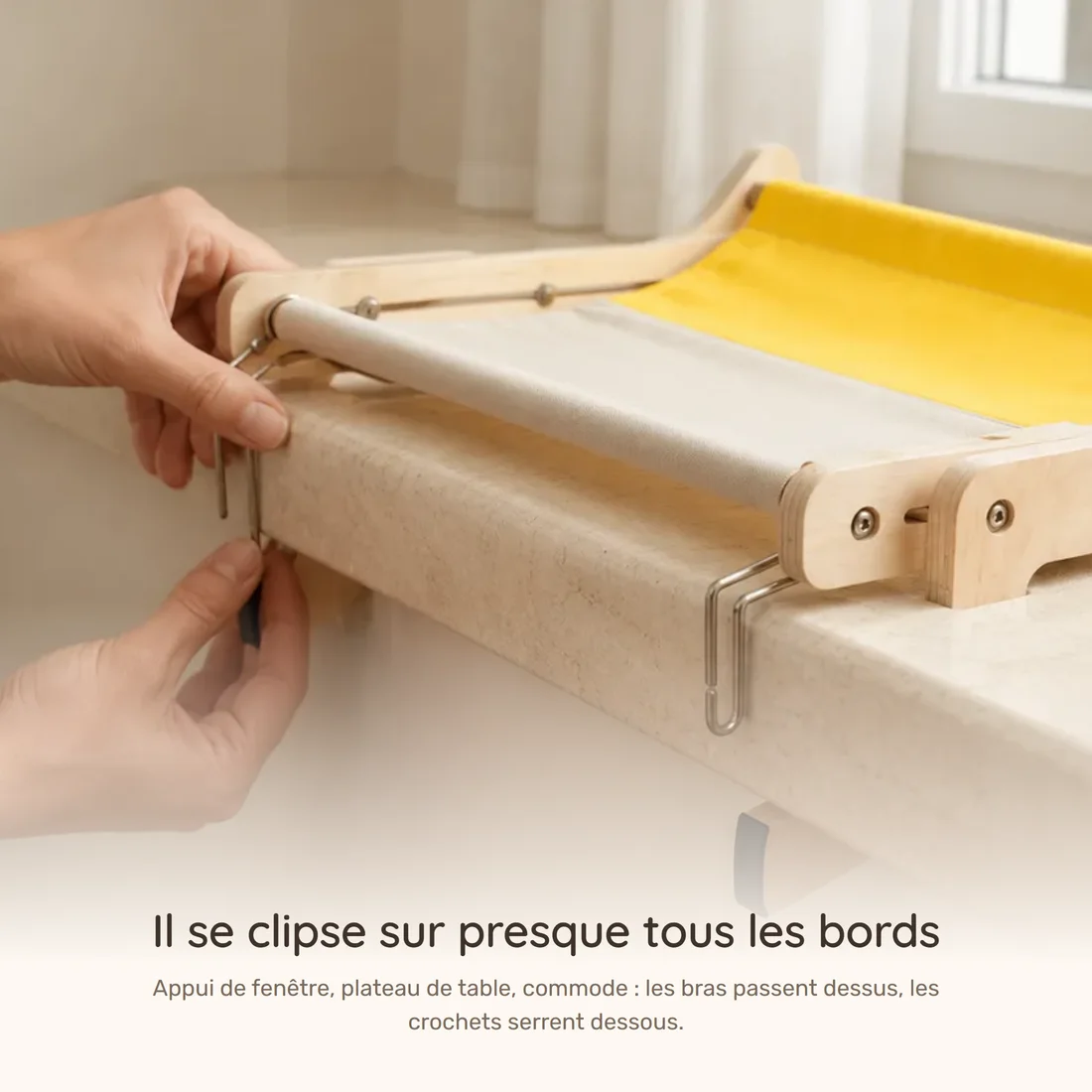
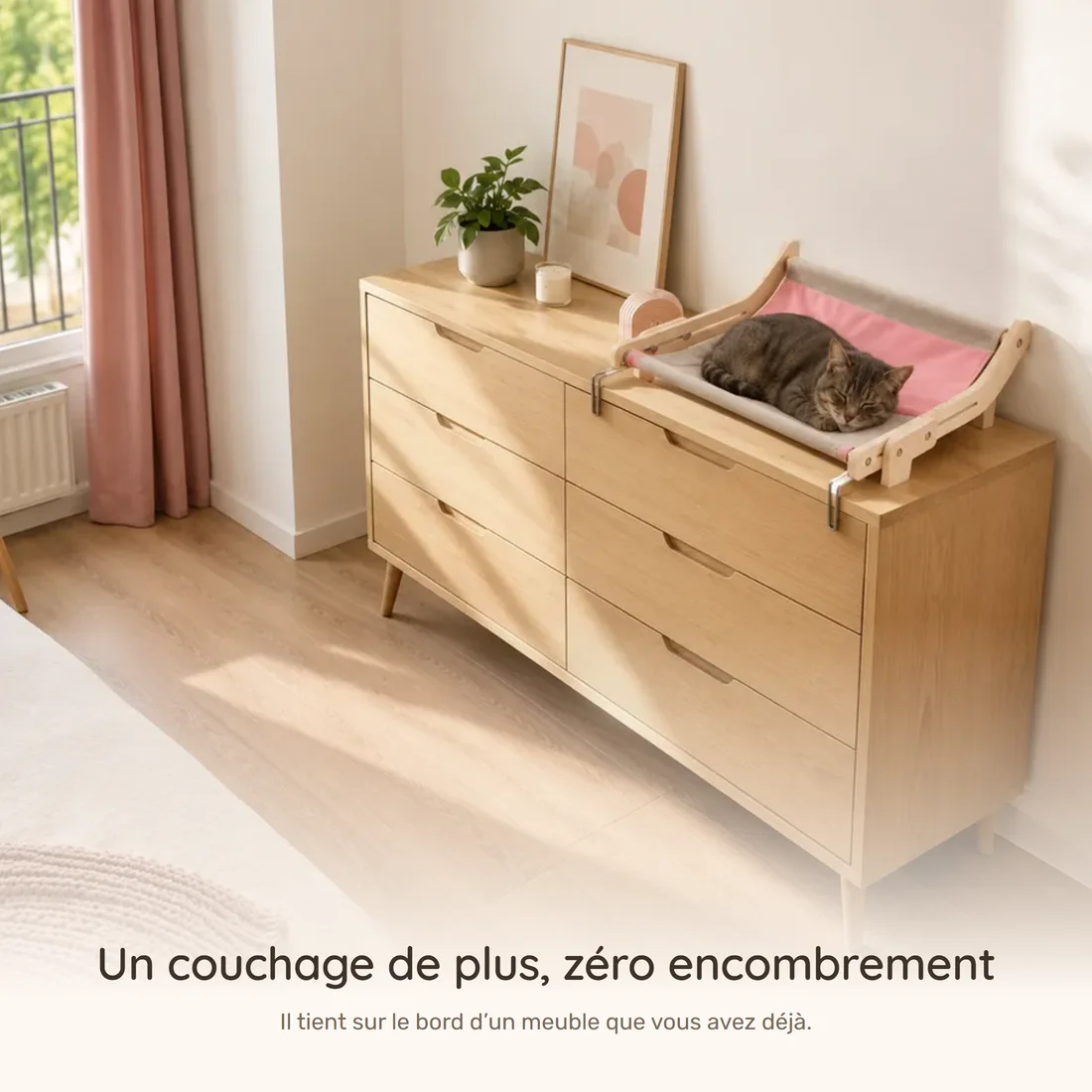
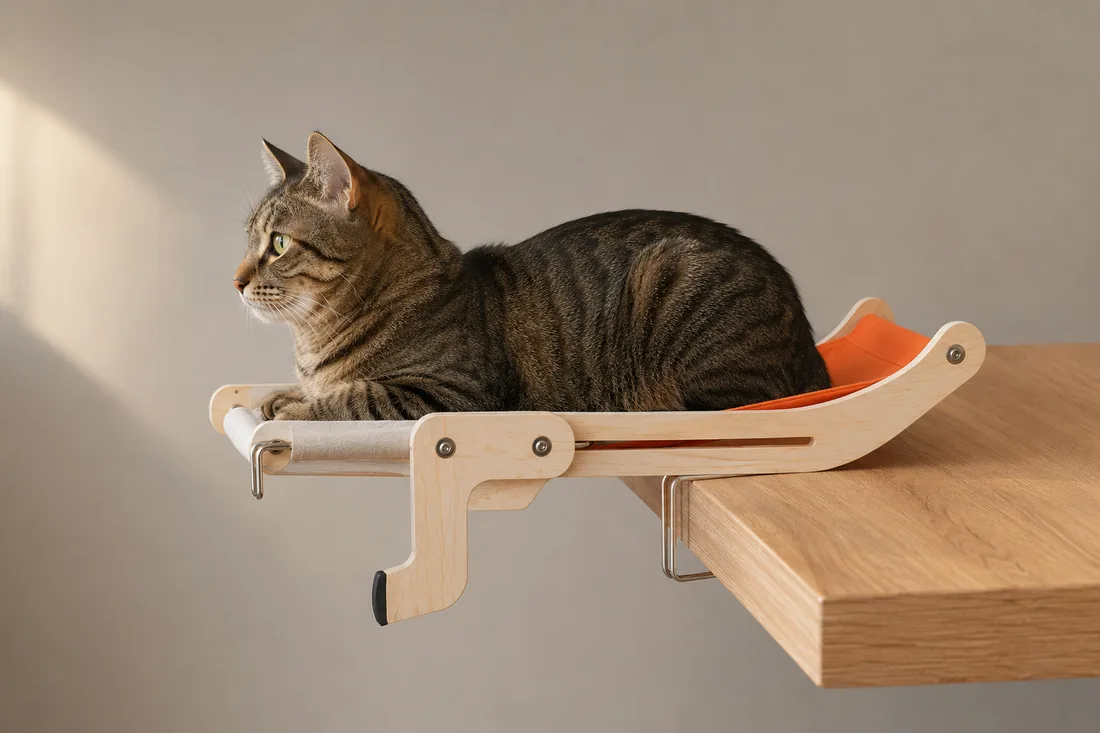
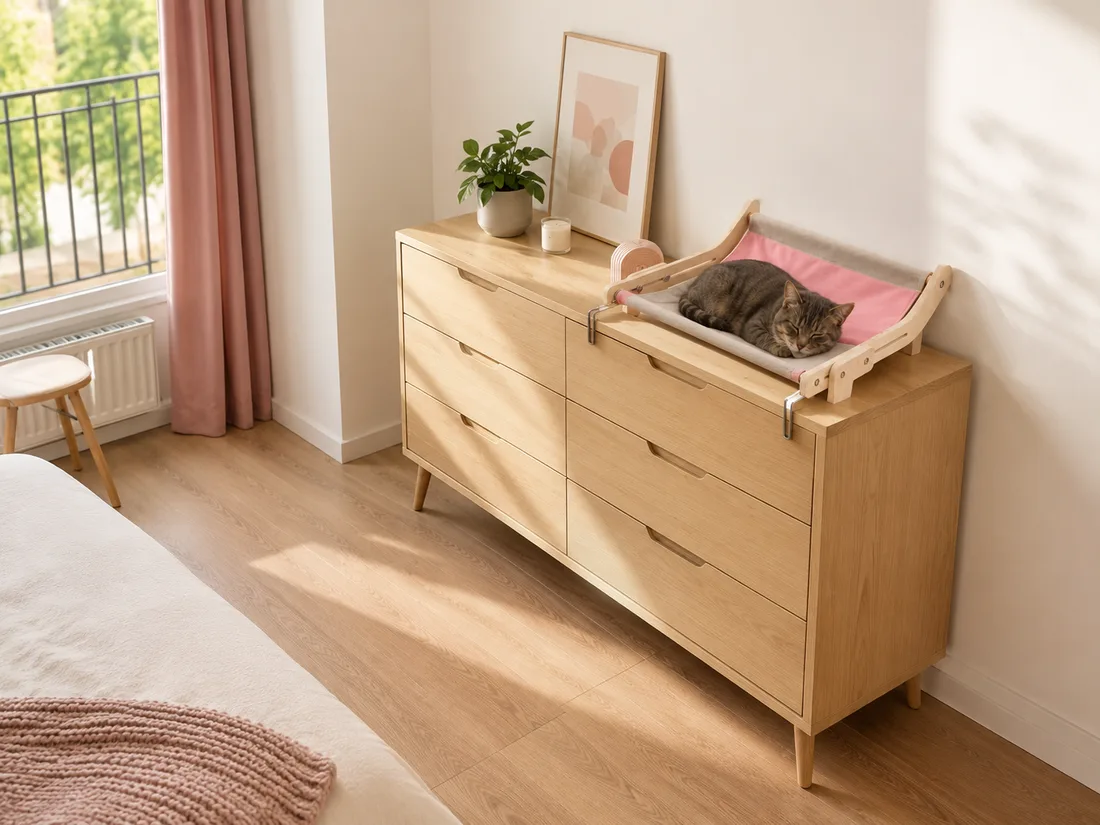
The frame clamps over the sill like a clip. It needs a ledge that projects, is flat, and is reachable from underneath. Three setups work with no discussion: the stone or timber inner sill of an older building, a fitted window board, and — this one surprises people — the edge of a chest of drawers or a desk. The clamp does not know it is on a window.
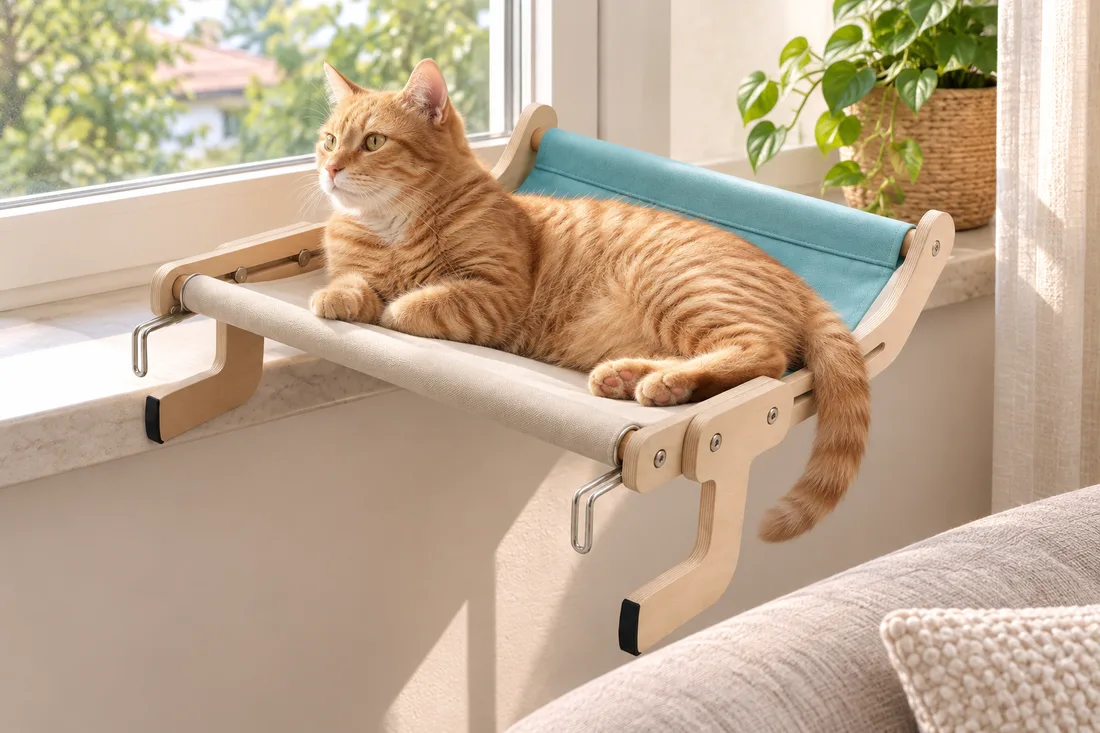
You need about 5 cm of clearance under the ledge to get the clamp in. A sill flush to the wall, or one with a radiator immediately below it, does not leave enough room. That is worth a look before you order, because it is the one thing no adjustment rescues.
Assembly, no tools
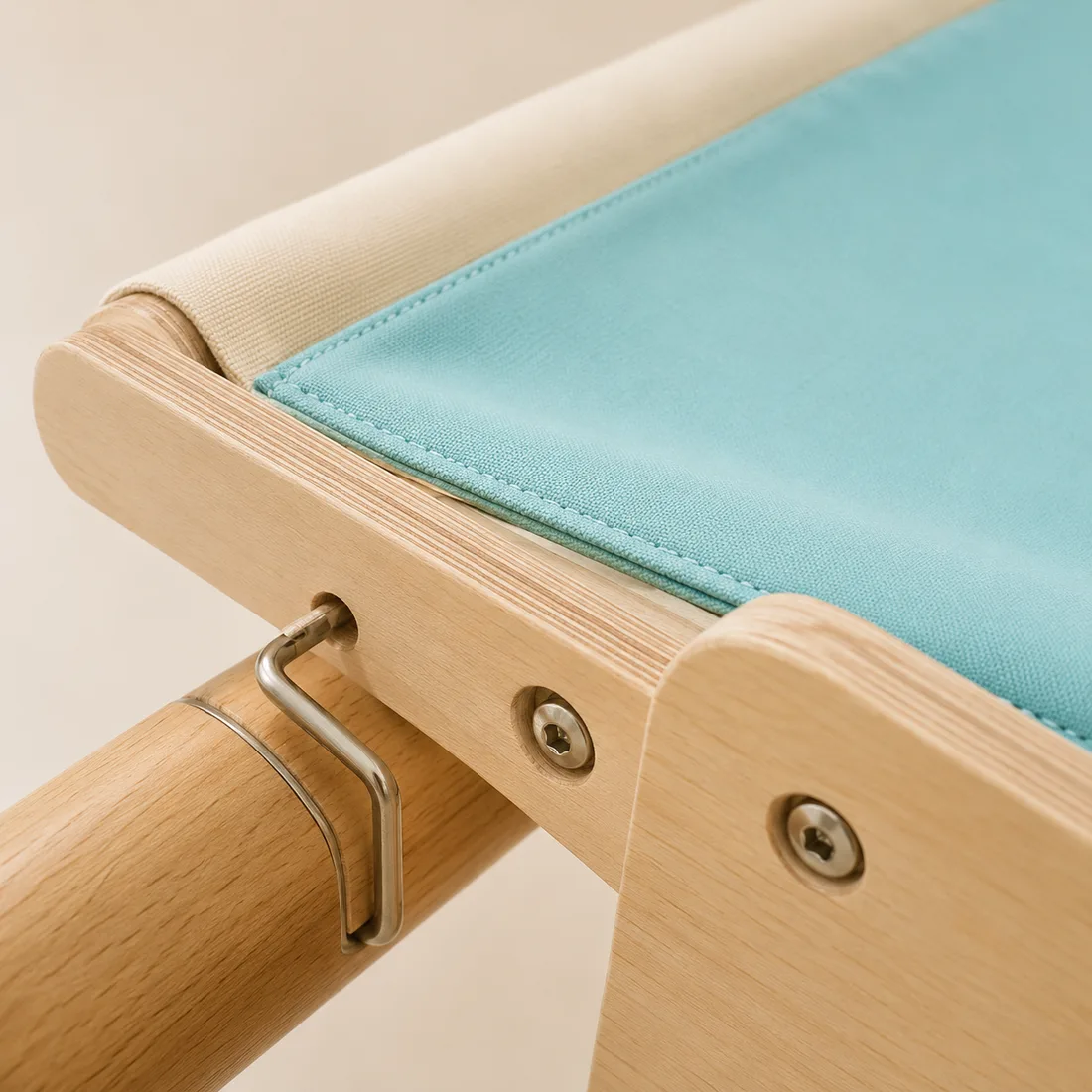
It arrives flat, as three pre-drilled plywood pieces with the canvas already mounted. You slot them together, tighten two thumb wheels by hand, and clip it on. No tools, no wall plugs, no holes in the wall — which is the main argument for this model if you rent.
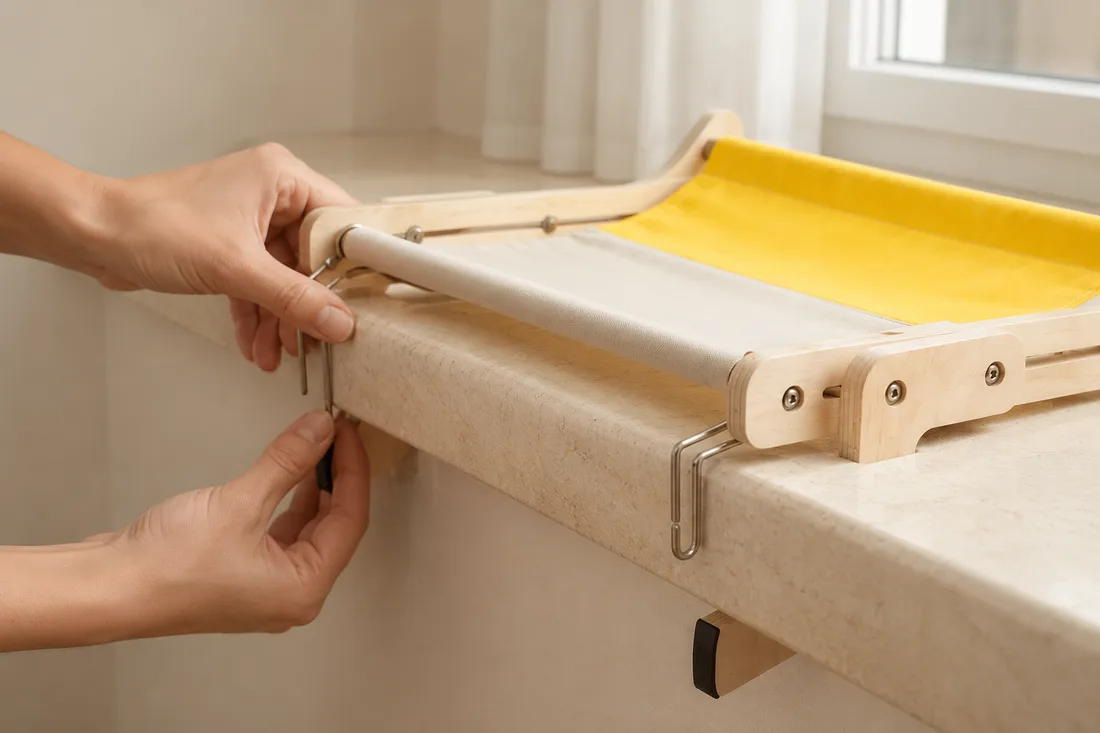
The one point to get right is canvas tension: tighten the wheels until the fabric is taut but still gives a little under the palm. Overtighten it and the cat sits on a board; leave it slack and the frame twists.
Washing the canvas, looking after the wood
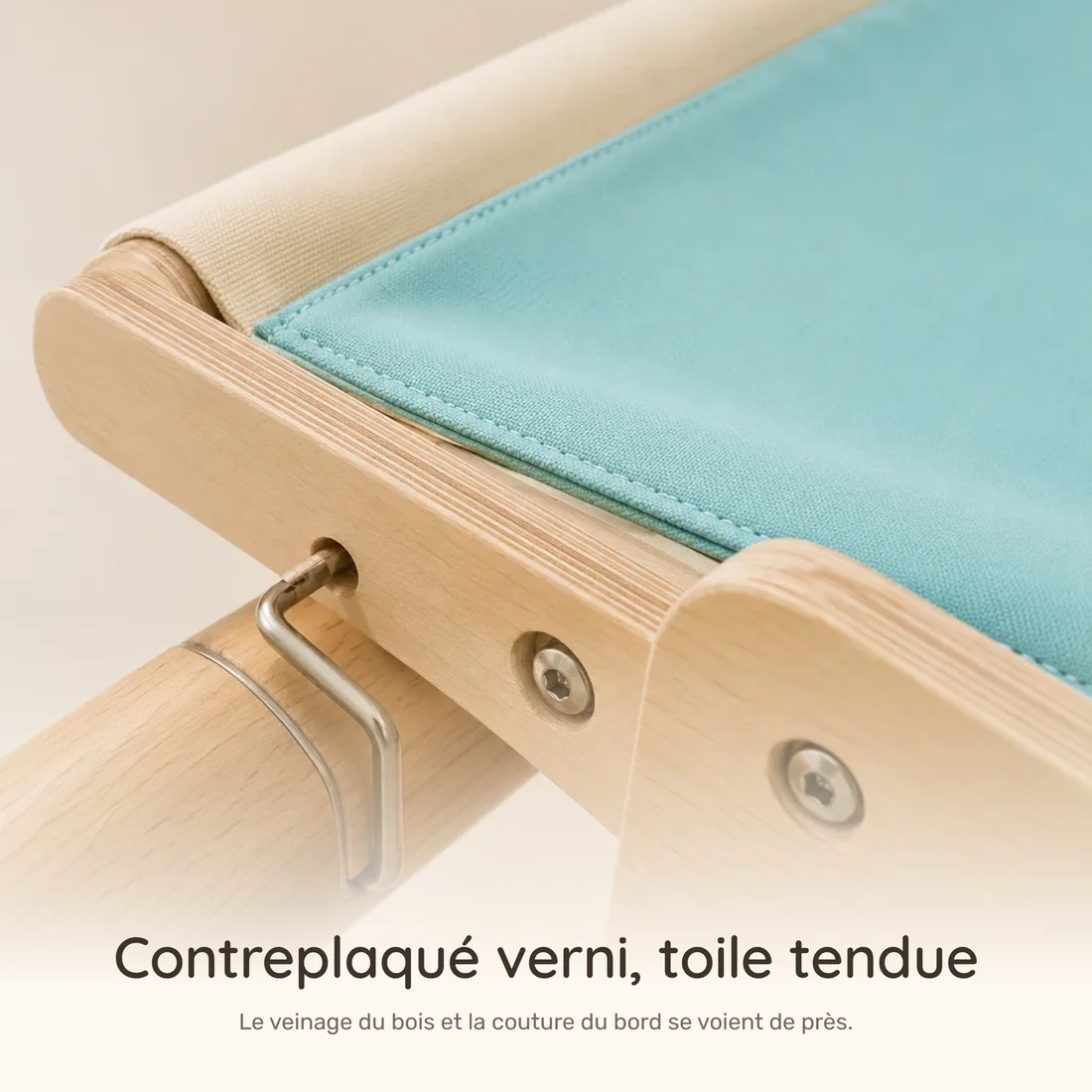
The canvas is cotton. Release the two tension bars, lift it off the frame, and machine wash at 30 °C. It may shrink very slightly on the first wash; that is harmless, the wheels take the tension back up. Air dry.
The plywood is varnished and only wants a damp cloth. Keep it out of standing water — an occasional splash is fine, a puddle on a sill in the rain is not.
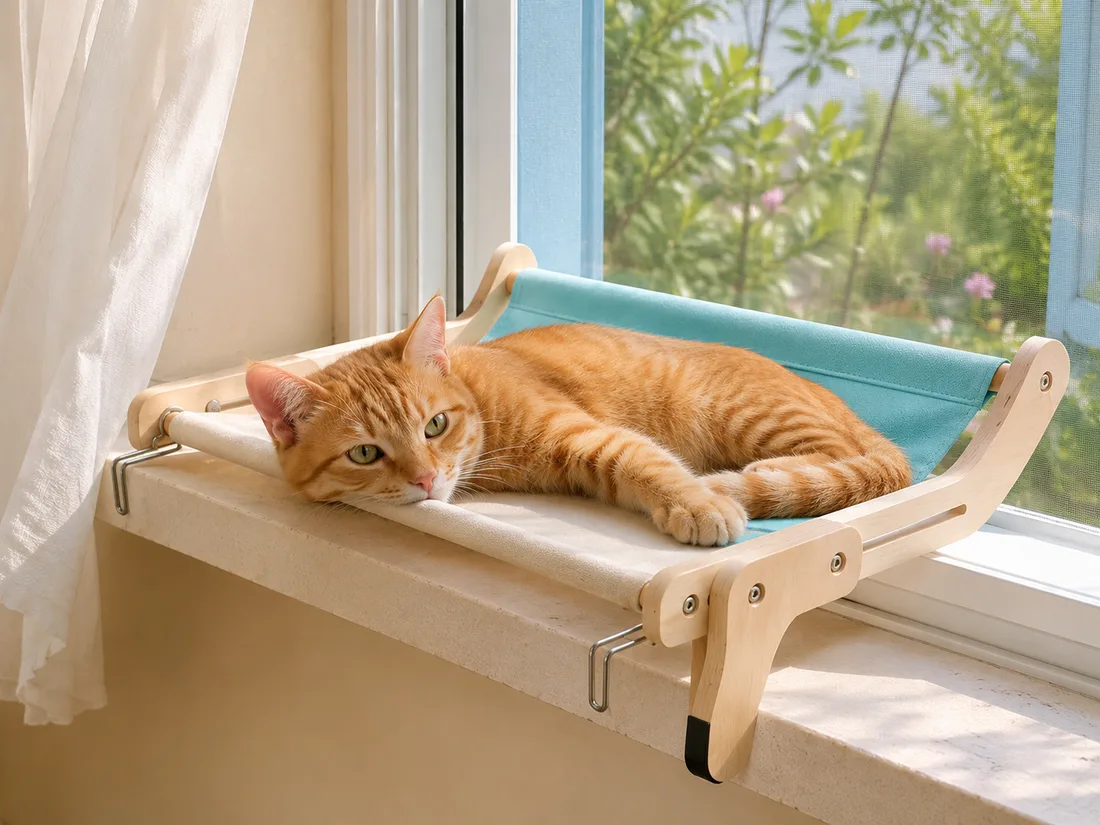
It stands on the floor too, and that is not a fallback
The same frame, set flat on its four feet, becomes a low bed. This is not a consolation prize: several buyers keep it that way all year, particularly for an older cat that no longer jumps, or in a room with no usable sill.
That doubles where it can go. A perch that only works at a window is worth one spot in the house; this one moves to wherever the cat currently prefers, which for most cats changes with the season and with the light.
What the wooden frame does better than the other two
Three things, and they rarely come together. It touches neither the glass nor the wall, so it suits a textured or filmed window where a suction cup would never hold. It comes apart flat, which matters if you move. And its bed is the only one of the three that is fully removable — the canvas comes off completely, rather than being wiped down in place.
What it asks in return is a sill. No ledge, no clamp: on a flush window, the suction model is the one to look at.
the dimensions of the assembled frame, feet included
— dimensions printed on the manufacturer's own product images, 2026
of clearance needed under the ledge to engage the clamp
— measured on the product, 2026
of canvas actually sold: teal, orange, yellow, pink
— range checked visually, one product shot per color, 2026
Questions about the wooden model
How deep does my sill need to be?
Around 43 cm — roughly 17 inches — for the frame to sit fully supported. The adjustable hooks underneath take up small differences.
Can the canvas go in the machine?
Yes. It comes off the frame and machine washes. It is the only one of our three models whose bed comes apart completely.
Will it take a big cat?
One buyer describes a cat of around 7 kg / 15 lb settling on it without trouble. That is a reported use, not a rated capacity: no maximum load is published for this model.
Is it complicated to put together?
Four screws and printed instructions. Buyers describe it as a few minutes of work, with no tools needed.
The wooden-frame perch in detail